
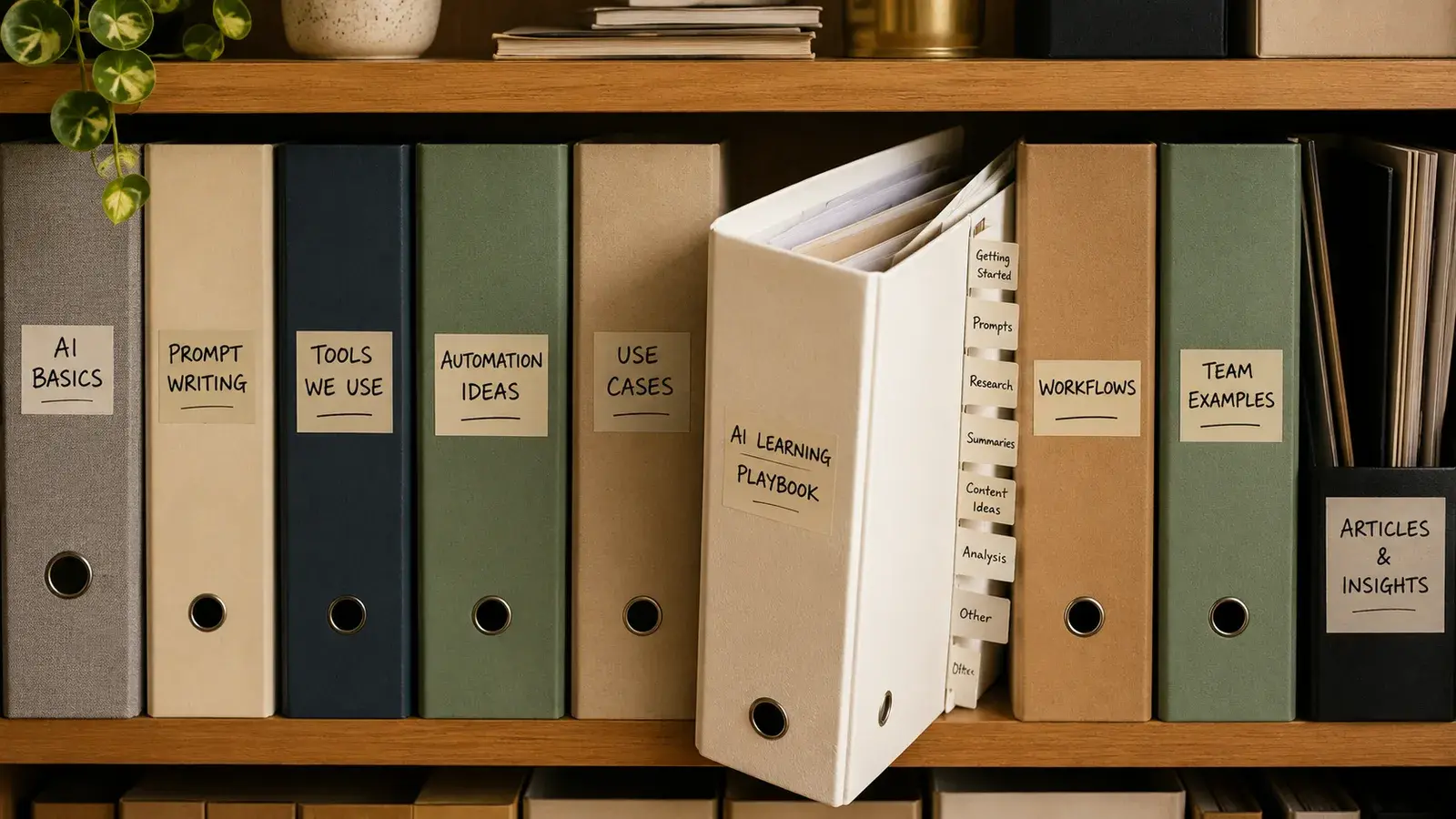
AI literacy training is training that gives staff the specific knowledge to use their business's AI tools safely and effectively. Effective training is built directly around the tools and roles already in the business.
AI literacy training has become one of those phrases every vendor uses and few define the same way. Under Article 4 of the EU AI Act, taking measures to support staff AI literacy has been a legal requirement since 2 February 2025, and the Digital Omnibus amendment, in force from 27 July 2026, kept that obligation in place while removing any single mandated standard for how thorough it needs to be.[1] That leaves a real gap for anyone actually choosing a training option. The law confirms you need it, but says almost nothing about what makes one version work and another version a waste of an afternoon. The law will not tell you which is which.
An AI Readiness Assessment is the fastest way to find out which AI tools your team is already using, before you try to build training around them.
What is AI literacy training?
AI literacy training is the practical instruction that lets staff understand what an AI tool does, where it can go wrong, and how to use it responsibly within their own job. That is a different thing from a general talk about artificial intelligence, and the difference is the whole subject of this article.
Article 4 of the EU AI Act asks businesses to take measures supporting exactly this kind of understanding among staff and anyone else using AI on the business's behalf, and what that legal duty actually requires in full is covered in detail elsewhere. What matters here is narrower and more practical. Two training sessions can both tick the Article 4 box on paper and produce completely different outcomes inside the same business, because the law sets the obligation and leaves the content entirely to whoever designs the session.
In summary
Judge training by what staff can do differently on Monday morning.
Why does generic AI literacy training fail?
The same generic slide deck gets shown to completely different businesses, with only the logo changed, and it fails in each one for the same reason. It was never built around what that business's staff actually do with AI. Generic training explains AI as an abstract category. Effective training explains the specific tool sitting on someone's desktop, what it is good at, where it gets things wrong, and what the person using it is expected to do when that happens. A course that never names a real tool cannot prepare anyone for the tool they open after lunch.
Staff who sit through a generic session can usually repeat back a definition of AI. Fewer can say whether the tool they use daily is safe to paste a client's contract into. When training never gets specific, staff tend to keep experimenting quietly with whatever tool solves their problem fastest, which is exactly how shadow AI takes hold in a business that thought it had covered the basics. Only a third of organisations in Ireland have provided any AI training at all, so a session that technically happened already puts a business ahead of most of its peers.[2] That still says nothing about whether the session actually worked.
In summary
Would your staff know which of their daily AI tools is safe to paste a client's contract into? If not, the training has not landed yet.
What does effective AI literacy training actually include?
Effective AI literacy training starts with an inventory of the AI tools already running in the business, then builds sessions around what those specific tools do and who uses them. Before any session gets built, someone needs to know what is actually in use, such as the AI features already switched on inside Microsoft 365, the free chatbot a couple of people opened last winter and never mentioned, or the tool a supplier recommended over coffee. An AI Readiness Assessment is built to surface exactly that list. Training that skips this step ends up teaching AI in the abstract, because nobody involved actually knows what they are training people to use.
From there, the content should map to risk and role, with more depth going to whoever's decisions carry more weight. A receptionist drafting a routine email carries a different risk than a finance manager relying on an AI summary to make a call, and training that gives both the same forty minutes has already missed the point.[1] Good training also leaves something behind, a short written note of who attended, what was covered, and when, which becomes exactly the record Article 4 already expects a business to keep.
In summary
Training built from a tool inventory teaches people about the AI they will actually open again tomorrow.
How do you evaluate an AI literacy training option before buying it?
Ask a training provider four direct questions before committing, and a generic course usually fails at least two of them. Does the session name the specific tools your staff use, or only AI as a category? Does the content change for someone whose decisions carry more risk, or is everyone getting the same forty minutes? Is there a written record of who attended and what was covered, or does the course end with a certificate and nothing else? And will anyone update the material once your business adopts a new tool, or is this a one-off?
A similar four-question filter works well when choosing the AI tools themselves, and the same discipline of asking specific questions applies just as well here. A cheap course built for nobody in particular usually costs more once you count the hours spent sitting through content that changes nothing back at the desk.
In summary
Ask what tools the session names before you ask what it costs.
Do all employees need the same training?
Not every employee needs the same AI literacy training. The depth should match how much a person's role depends on AI output.
Article 4's own wording extends the obligation beyond a business's direct payroll to contractors and other people acting on its behalf, so a bookkeeper working two days a week under contract needs the same consideration as a full-time staff member using the same tool.[1] For anyone whose role touches a high-risk AI system, the training bar sits higher again under Article 26's human oversight rules, a separate and stricter obligation that follows the postponed Annex III high-risk timeline of 2 December 2027 rather than Article 4's own schedule, and this article does not repeat the detail. In practice this usually sorts into two or three tiers, light coverage for occasional, low-stakes use, a deeper session for anyone whose output feeds a decision, and a further layer again for whoever is accountable when something goes wrong. Nobody needs the same forty minutes.
In summary
The depth of training should follow what a person's decisions actually touch.
How does training fit with the rest of AI governance?
AI literacy training works best paired with a written AI acceptable use policy, giving the same rules somewhere to live after the session ends. A session explains the reasoning behind a rule. A policy fixes the rule in place once the room empties, and staff can check it months later without remembering a single slide. What a proper AI acceptable use policy should cover is covered in full elsewhere, and the two documents are designed to reinforce each other.
That pairing matters more as enforcement becomes active this year. Ireland's Article 4 supervision passes to national market surveillance authorities from 3 August 2026, and the practical stakes of getting training right are about to become less abstract for a lot of businesses that assumed 2026 was still early days.
In summary
Training fades fast without a policy behind it. A policy nobody was trained on just sits in a drawer.
AI literacy training only earns its place on the calendar if it changes what people do with the tools already open on their screens. AI Literacy and Safe Use Training is built to close exactly this gap, using your own tools and roles. Get in touch and we can work out the right starting point together.